How Korean Dermatologists Treat Melasma & Sun Spots from Travel
Korean dermatologists first determine whether facial pigmentation is melasma, sun spots, freckles, or post-inflammatory hyperpigmentation. Individual sun spots may respond to pico spot treatment, pigment laser, IPL, or selected physical treatments, while melasma generally requires conservative long-term management with sun protection, topical medication, and carefully selected procedures. Aggressive laser treatment can trigger rebound pigmentation, particularly in melasma or recently tanned skin.
Why Pigmentation Appears After Travel
Travel can increase exposure to several pigmentation triggers:
- Ultraviolet radiation
- Visible light
- Heat
- Humidity
- Outdoor sightseeing
- Beach or pool activities
- Hormonal changes
- Skin irritation
- New cosmetic products
- Acne breakouts
- Insect bites
- Aggressive exfoliation
Even when a dark patch appears during a trip, it may represent a pre-existing condition that became more visible after sun exposure.
A dermatologist should examine the pigmentation before recommending laser treatment.
Melasma vs Sun Spots: What Is the Difference?
What Is Melasma?
Melasma usually appears as irregular brown or gray-brown patches, often distributed symmetrically across the:
- Cheeks
- Forehead
- Upper lip
- Nose
- Chin
It can be influenced by sunlight, visible light, heat, hormones, pregnancy, genetic tendency, and certain medications.
Melasma is usually chronic and can return after improvement. It should be managed rather than treated as a simple spot that can always be removed permanently.
What Are Sun Spots?
Sun spots, also called solar lentigines, are usually individual, well-defined brown patches associated with cumulative sun exposure.
They commonly appear on:
- Face
- Cheeks
- Forehead
- Hands
- Arms
- Upper chest
- Shoulders
Selected sun spots may respond more directly to pigment-specific treatment than melasma.
Any spot that is changing in size, shape, color, or texture should be medically examined before cosmetic removal.
What Are Freckles?
Freckles are usually smaller, lighter spots that become more noticeable after sun exposure. They may fade during periods of reduced sunlight and return with ultraviolet exposure.
Freckles can respond to pigment treatment, but recurrence is common without consistent sun protection.
What Is Post-Inflammatory Hyperpigmentation?
Post-inflammatory hyperpigmentation, or PIH, develops after skin inflammation or injury.
Common triggers include:
- Acne
- Insect bites
- Scratching
- Sunburn
- Cosmetic irritation
- Laser treatment
- Chemical peels
- Aggressive extraction
PIH is especially common in medium to darker skin tones. Treatment that creates additional inflammation can make the pigmentation worse.
How Korean Clinics Diagnose Pigmentation
A consultation may involve:
- Medical history
- Visual examination
- Digital skin analysis
- Dermoscopy
- Wood’s lamp examination
- Review of recent sun exposure
- Assessment of skin tone
- Discussion of hormones and medication
- Review of previous laser treatments
Digital analysis can support the consultation, but it does not replace an appropriate medical diagnosis.
Tell the doctor if you:
- Recently tanned
- Had a sunburn
- Are pregnant or breastfeeding
- Use hormonal medication
- Have a history of melasma
- Developed pigmentation after previous lasers
- Use retinoids or exfoliating acids
- Have a history of keloids
- Take photosensitizing medication
How Korean Dermatologists Treat Melasma
Melasma usually requires a conservative, multi-step approach.
The treatment plan may include:
- Daily sun protection
- Tinted sunscreen
- Prescription topical medication
- Gentle pigment-control skincare
- Conservative laser toning
- Selected pico treatment
- Chemical peels in appropriate patients
- Tranexamic acid when medically appropriate
- Barrier-recovery treatment
- Long-term maintenance
The goal is gradual control without triggering inflammation or rebound pigmentation.
Sun Protection Is the Foundation of Melasma Care
No laser can provide stable melasma improvement if the skin continues to receive significant ultraviolet and visible-light exposure.
A dermatologist may recommend:
- Broad-spectrum sunscreen
- Regular reapplication
- Tinted sunscreen containing visible-light-blocking pigments
- Wide-brimmed hat
- Sunglasses
- Shade
- Avoiding peak sunlight
- Reducing excessive heat exposure
Travelers should carry sunscreen during sightseeing rather than applying it only in the morning.
Prescription Topical Treatments
Depending on the patient, Korean dermatologists may recommend topical products containing ingredients such as:
- Hydroquinone
- Tretinoin
- Mild corticosteroid as part of a supervised combination
- Azelaic acid
- Cysteamine
- Kojic acid
- Arbutin
- Niacinamide
- Vitamin C
- Other pigment-regulating ingredients
Prescription-strength products should be used under medical guidance. Overuse can cause irritation, rebound pigmentation, or other complications.
Pregnant and breastfeeding patients must tell the doctor before using prescription pigmentation products.
Tranexamic Acid for Melasma
Tranexamic acid may be used topically, injected, or prescribed orally in selected melasma cases.
Oral tranexamic acid is not suitable for everyone. It requires medical screening because it may increase clot-related risk in susceptible patients.
Tell the doctor about:
- History of blood clots
- Clotting disorders
- Smoking
- Hormonal contraception
- Pregnancy
- Cardiovascular conditions
- Family history of thrombosis
- Current medication
Do not obtain oral medication solely through an aesthetic package without appropriate medical assessment.
Laser Toning for Melasma
Low-fluence laser toning is widely available in Korean clinics. It frequently uses a 1064 nm wavelength delivered at conservative settings.
It may help gradually improve selected melasma pigmentation, but several sessions are usually required.
Potential risks include:
- Irritation
- Rebound pigmentation
- Post-inflammatory hyperpigmentation
- Uneven lightening
- Mottled hypopigmentation
- Temporary dryness
Repeated treatment should be monitored carefully. More sessions or higher energy do not automatically produce better results.
Estimated Seoul Price
Approximately ₩50,000–₩250,000 per session.
Pico Toning for Melasma
Pico toning may be used as part of a conservative melasma program. Picosecond devices deliver energy in very short pulses, but the word “pico” does not automatically mean that a treatment is safe for every patient.
Results depend on:
- Wavelength
- Energy
- Spot size
- Treatment depth
- Number of passes
- Skin tone
- Practitioner experience
Pico spot treatment should not be applied aggressively across melasma as if every patch were an isolated sun spot.
Estimated Seoul Price
Approximately ₩100,000–₩600,000 per session.
How Korean Dermatologists Treat Sun Spots
Individual solar lentigines may respond to more targeted treatment.
Options may include:
- Pico spot treatment
- Q-switched pigment laser
- IPL
- Cryotherapy
- Chemical peels
- Topical pigment treatment
After pigment laser treatment, a sun spot may initially become darker before forming a small crust or fading.
Patients should not pick the treated area because this can increase the risk of scarring or pigmentation changes.
Pico Spot Treatment for Sun Spots
Pico spot treatment delivers focused energy to selected pigmented lesions.
It may be considered for:
- Clearly defined sun spots
- Freckles
- Selected post-inflammatory marks
- Certain superficial pigment lesions
Temporary effects may include:
- Redness
- Darkening
- Small crusts
- Sensitivity
- Post-inflammatory pigmentation
- Temporary lightening
A test spot may be recommended for patients with darker skin or a history of pigmentation after laser treatment.
Estimated Seoul Price
The cost varies according to the number and size of spots. Full-face or multiple-spot treatment may range from approximately ₩100,000–₩600,000 or more.
IPL for Sun Damage and Mixed Pigmentation
IPL uses broad-spectrum light rather than a single laser wavelength.
It may be considered for:
- Freckles
- Solar lentigines
- Mild redness
- Visible vessels
- General photodamage
- Uneven tone
Pigmented spots may become temporarily darker before flaking or fading.
IPL is not appropriate for every skin tone. Darker or recently tanned skin can absorb more light energy, increasing the risk of burns and pigmentation changes.
Estimated Seoul Price
Approximately ₩50,000–₩400,000 per session.
Chemical Peels
Chemical peels may be used to support treatment of superficial pigmentation and uneven texture.
Options vary in strength and composition. A mild peel may cause limited dryness, while a stronger peel can produce redness, flaking, crusting, or pigmentation changes.
Chemical peels require particular caution in:
- Darker skin tones
- Sensitive skin
- Active dermatitis
- Recently tanned skin
- Patients prone to PIH
- Travelers leaving Korea soon
A strong peel is not a quick glow treatment.
Can Melasma Be Permanently Removed?
Melasma can improve, but permanent removal cannot be guaranteed.
Even after successful treatment, it may return because of:
- Sun exposure
- Visible light
- Heat
- Hormonal changes
- Pregnancy
- Medication
- Skin irritation
- Genetic predisposition
Long-term maintenance and sun protection are essential.
Be cautious of clinics promising permanent melasma removal after one laser session.
Can Sun Spots Return?
A successfully treated spot may improve significantly, but new spots can develop with continued sun exposure.
Freckles may also return or become darker.
Daily sunscreen, protective clothing, and reduced ultraviolet exposure can help maintain results.
Should You Get Pigmentation Laser After a Beach Trip?
Not immediately.
Recently tanned or sunburned skin may have a higher risk of:
- Burns
- Blistering
- Prolonged redness
- Post-inflammatory hyperpigmentation
- Hypopigmentation
- Uneven results
Tell the clinic exactly when the sun exposure occurred. The dermatologist may recommend delaying laser treatment, using topical care first, or performing a test spot.
Best Option for Travelers with Only a Few Days in Seoul
If your stay is short, a consultation and conservative plan may be more valuable than aggressive same-day laser treatment.
Possible low-downtime options include:
- Skin analysis
- Gentle laser toning
- LDM
- LED therapy
- Calming care
- Prescription skincare planning
- Sun-protection guidance
Pico spot treatment, IPL, and stronger procedures may create visible darkening or crusting. Schedule them early enough to monitor recovery.
Melasma usually requires long-term treatment. One Seoul session should be viewed as the beginning of a plan rather than a complete cure.
How Long Before Flying Should You Get Treatment?
General timing may include:
- Gentle laser toning: approximately two to three days before flying
- Pico toning: approximately two to five days
- IPL: approximately five to seven days
- Pico spot treatment: approximately five to ten days
- Strong fractional treatment: one to two weeks or longer
- Chemical peel: depends on the depth and expected recovery
These are general estimates. Follow the treating clinic’s instructions.
Pigmentation Treatment for Darker Skin Tones
Patients with Fitzpatrick IV–VI skin require careful device and setting selection because of the increased risk of PIH.
A dermatologist may consider:
- Conservative 1064 nm laser treatment
- Carefully selected pico settings
- Topical pigment-control treatment
- Test spots
- Longer treatment intervals
- Strict sun protection
- Staged rather than aggressive combination treatment
IPL and shorter pigment-targeting wavelengths require additional caution.
The patient’s actual skin type and treatment history are more important than ethnicity alone.
Aftercare Following Pigment Treatment
General aftercare may include:
- Apply broad-spectrum sunscreen
- Reapply sunscreen outdoors
- Use a hat
- Avoid direct sunlight
- Use gentle cleanser and moisturizer
- Do not pick crusts
- Avoid scrubs and acids
- Pause retinoids when instructed
- Avoid saunas and excessive heat
- Avoid irritating skincare products
- Follow prescribed medication instructions
The clinic’s specific advice should take priority.
When Should a Dark Spot Be Medically Examined?
Not every dark spot should be removed cosmetically.
Seek medical examination if a lesion:
- Changes in size
- Changes in shape
- Develops irregular borders
- Contains several colors
- Bleeds
- Itches persistently
- Becomes raised
- Looks different from other spots
- Fails to heal
A suspicious lesion may require dermoscopic evaluation or biopsy rather than laser removal.
How Much Does Pigmentation Treatment Cost in Seoul?
Estimated prices may include:
- Laser toning: ₩50,000–₩250,000
- Pico toning: ₩100,000–₩600,000
- Pico spot treatment: ₩100,000–₩600,000 or more
- IPL: ₩50,000–₩400,000
- Chemical peel: ₩50,000–₩300,000
- Combination pigmentation program: ₩200,000–₩1,000,000 or more
The final price depends on:
- Diagnosis
- Number of spots
- Treatment area
- Device and wavelength
- Treatment intensity
- Doctor
- Aftercare
- Medication
Ask for the final amount including 10% VAT. The foreign-tourist cosmetic medical VAT-refund program is not available for treatments received from January 1, 2026.
Questions to Ask a Korean Dermatologist
Ask:
- Is this melasma, sun damage, freckles, or PIH?
- Is the pigmentation epidermal, dermal, or mixed?
- Could laser treatment make it worse?
- Which wavelength and treatment mode will be used?
- Is a test spot recommended?
- How many sessions may be required?
- What is the risk for my skin tone?
- What topical treatment should I use?
- What downtime should I expect?
- When can I fly?
- How can I prevent recurrence?
- Does the price include VAT and aftercare?
A good consultation should identify the pigmentation before discussing the promotional package.
Final Thoughts
Korean dermatologists treat melasma and sun spots differently because they are not the same condition.
Clearly defined sun spots may respond to pico spot treatment, pigment laser, IPL, or selected physical treatments. Melasma usually requires a slower combination of sun protection, topical medication, and carefully controlled procedures.
If pigmentation became more noticeable during travel, avoid rushing into an aggressive laser while the skin is tanned, sunburned, or irritated. Begin with an accurate diagnosis, protect the skin from further exposure, and choose a treatment plan designed to improve pigmentation without creating more inflammation.
At Val:U Clinic, Myeongdong
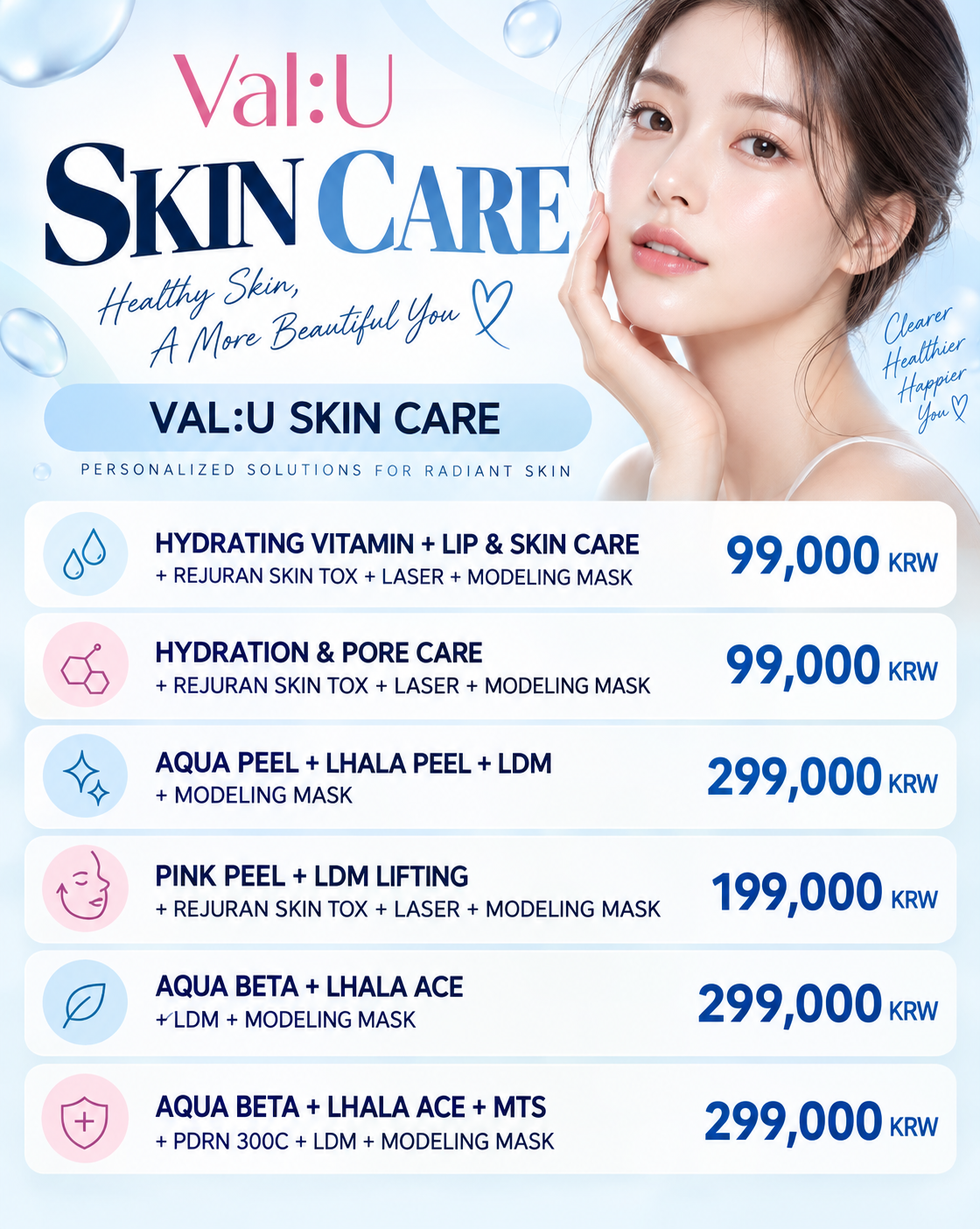
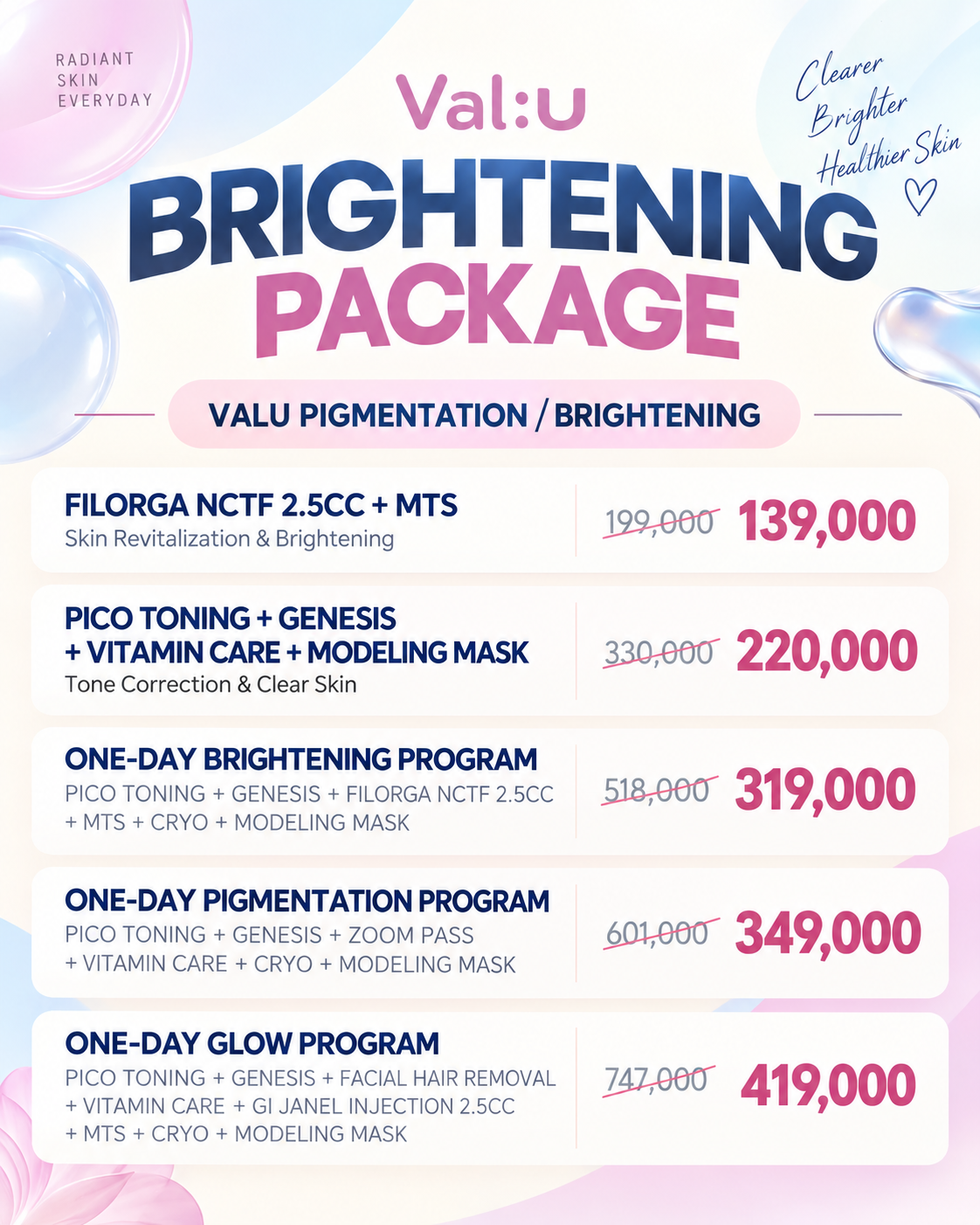
pigment treatments: our prices
| Treatment | Price (VAT 10% excluded) |
|---|---|
| PicoSure Toning
Premium pigmentation toning laser |
from KRW 120,000 |
| Dual Toning
Two toning modes in one session |
from KRW 220,000 |
| PicoSure Zoompass
Targets melanin in the top layer of skin |
from KRW 169,000 |
| Peeling
Removes dead skin and impurities |
from KRW 99,000 |
Official Val:U Clinic prices, October 2026, VAT 10% excluded. The doctor confirms your plan and total before treatment. Full price list.

Ask a doctor about pigment treatments
Send your concern, a photo if you like, and your travel dates on WhatsApp. We reply in English with options and prices, and the doctor confirms your plan at consultation before anything starts.
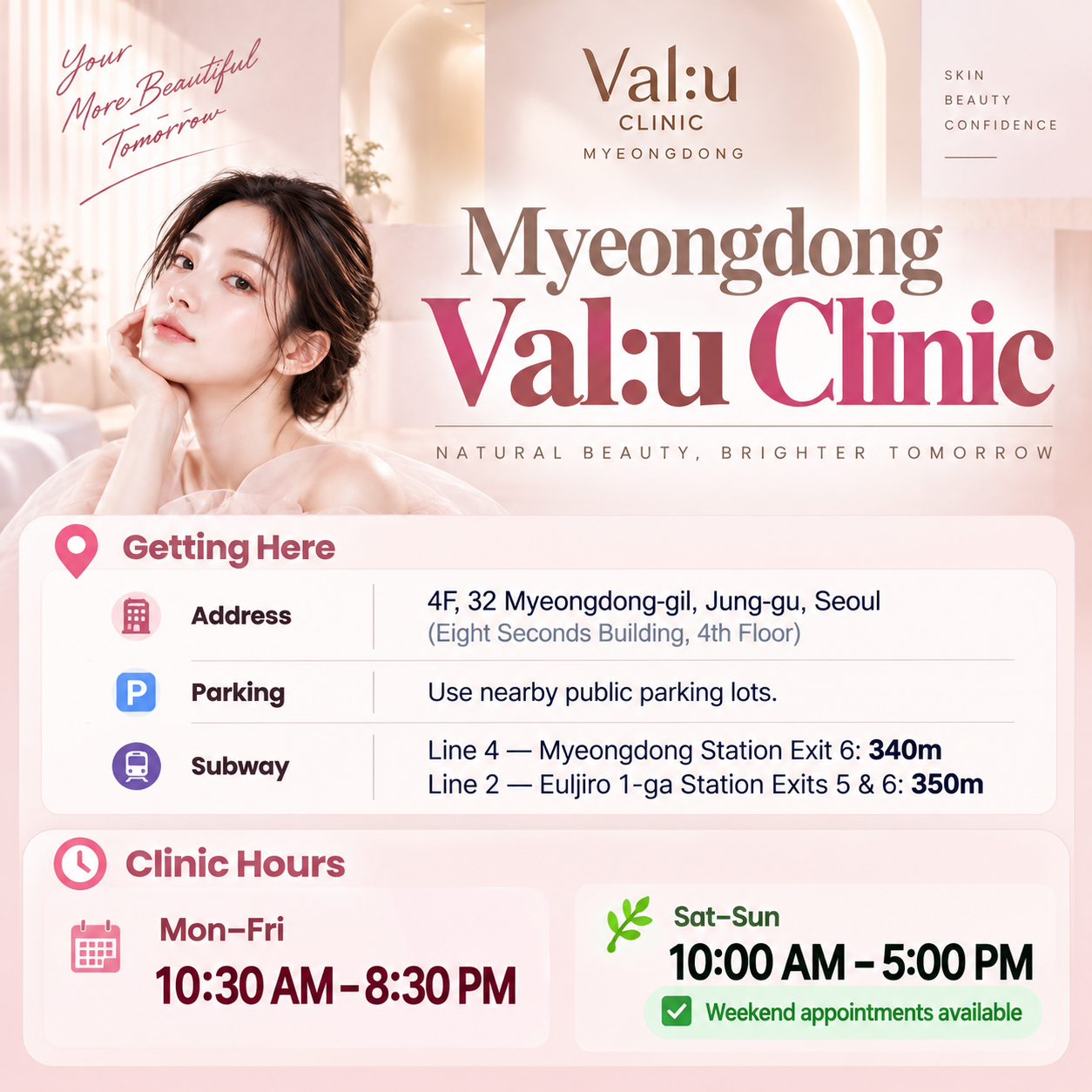
Val:U Clinic · 4F, 32 Myeongdong-gil, Jung-gu, Seoul · Mon–Fri 10:30–20:30 · Sat–Sun 10:00–17:00 · Tel +82-2-2039-7431