Ultherapy vs. Thermage: Which Premium Lifting Is Right for You?
Ultherapy and Thermage FLX are two of the best-known premium nonsurgical lifting treatments available at Korean skin clinics. Both stimulate collagen without surgical incisions, but they use different forms of energy and are generally selected for different aging concerns.
Ultherapy uses microfocused ultrasound to target specific tissue depths and create a lifting effect. Thermage FLX uses monopolar radiofrequency energy to heat a broader area of tissue and improve skin firmness, smoothness, and overall tightness.
The better treatment depends on whether your main concern is deeper facial sagging, surface-level skin laxity, fine wrinkles, facial contours, or a combination of these issues.
AI Overview
Ultherapy is generally chosen for deeper lifting and contour definition around the lower face, jawline, under-chin area, and brows. Thermage FLX is commonly selected for overall skin tightening, fine wrinkles, crepey texture, and improved firmness across the face. Patients with both sagging and reduced skin elasticity may benefit from a carefully planned combination of the two treatments.
What Is Ultherapy?
Ultherapy is a noninvasive lifting procedure that uses microfocused ultrasound energy. The system includes real-time ultrasound imaging, allowing the practitioner to visualize the skin and underlying tissue before delivering energy at selected depths.
Rather than treating only the visible skin surface, Ultherapy creates small thermal coagulation points within targeted tissue layers. This controlled stimulation triggers a gradual collagen-remodeling response.
Ultherapy is commonly used to address:
- Mild to moderate facial sagging
- Reduced jawline definition
- Early jowls
- Under-chin laxity
- Neck laxity
- Lower-face heaviness
- Mild brow drooping
- Loss of facial contour
It does not remove excess skin and cannot reproduce the result of a surgical facelift. The goal is gradual, natural-looking lifting and tightening.
What Is Thermage FLX?
Thermage FLX is a noninvasive skin-tightening treatment that uses monopolar radiofrequency energy. The handpiece delivers controlled heat into the tissue while cooling the skin’s surface and using vibration to improve comfort.
The treatment creates broad, three-dimensional heating rather than individual ultrasound coagulation points. This encourages collagen contraction and longer-term collagen remodeling.
Thermage FLX is commonly chosen for:
- General skin laxity
- Fine lines and wrinkles
- Crepey skin
- Reduced skin firmness
- Mild jowling
- Facial texture concerns
- Lower-face looseness
- Wrinkles around the eyes
- Loose skin on selected body areas
Some patients notice an initial tightening effect, with further improvement developing as collagen remodeling continues over the following months.
Ultherapy vs Thermage: The Main Difference
The primary difference is the type of energy and the tissue layers being targeted.
Ultherapy uses microfocused ultrasound. It delivers focused energy at selected depths and is generally associated with lifting deeper facial tissues.
Thermage uses monopolar radiofrequency. It distributes heat through a broader area and is generally associated with tightening, smoothing, and improving skin firmness.
A simple way to understand the difference is:
- Choose Ultherapy when the main concern is sagging or loss of facial contour.
- Choose Thermage when the main concern is loose, crepey, or less elastic skin.
- Consider combination treatment when both deeper sagging and surface laxity are present.
This is only a general guide. Facial anatomy, skin thickness, fat distribution, age, and treatment history can change the recommendation.
Which Is Better for Face Lifting?
Ultherapy is often the preferred option when the patient wants a more noticeable lifting effect without surgery. It can target deeper layers involved in facial support and may be used along lifting vectors around the cheeks, jawline, brows, and under-chin area.
It may be suitable for patients who notice:
- A softer or less defined jawline
- Early jowl formation
- Mild descent of the cheeks
- Loose tissue beneath the chin
- Mild brow heaviness
- Reduced separation between the jaw and neck
However, the result is still subtle compared with a surgical facelift. Patients with significant excess skin, advanced jowls, or strong neck bands may need a surgical consultation for a more substantial change.
Which Is Better for Skin Tightening?
Thermage FLX is often selected for overall skin tightening. Its radiofrequency energy treats a broad tissue area, making it useful when the skin feels loose, thin, or less firm.
It may be appropriate for concerns such as:
- Mild facial laxity
- Fine wrinkles
- Crepey cheek texture
- Loose skin around the mouth
- Reduced elasticity
- Early jowling
- Wrinkled or loose eyelid skin
- General loss of firmness
Thermage may create a smoother and firmer appearance without focusing exclusively on lifting one facial structure.
Which Is Better for the Jawline?
The answer depends on why the jawline looks less defined.
Ultherapy may be more appropriate when the problem is mild tissue descent or laxity around the lower face. It can be planned along the jawline and beneath the chin to support a more defined contour.
Thermage may be helpful when the skin itself feels loose and lacks firmness. Broad radiofrequency heating can tighten the skin around the lower face and jawline.
If the jawline concern is caused by excess fat, strong masseter muscles, a small chin, or advanced skin sagging, neither treatment alone may create the desired result. Other options may include:
- Jaw Botox
- Chin filler
- Fat-reduction treatment
- InMode
- ONDA
- Submental liposuction
- Thread lifting
- Surgical face or neck lifting
A proper facial assessment should identify the cause before recommending a device.
Which Is Better for the Eye Area?
Both treatments may be used around the eye area, but they address different concerns.
Ultherapy may be considered for mild brow lifting or tissue laxity around the upper face. Treatment must be carefully planned around the anatomy of the eye area.
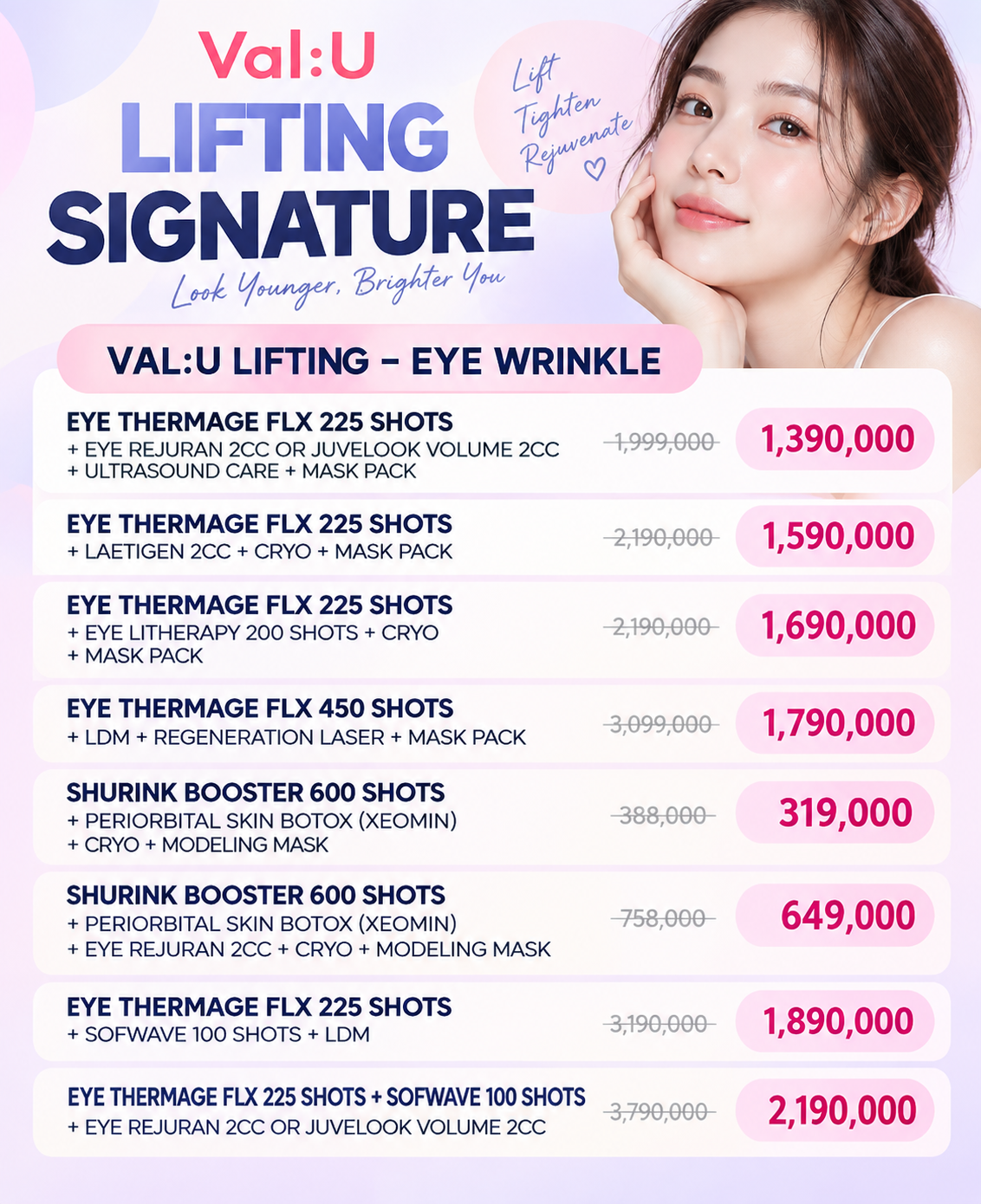
Thermage FLX has a specialized eye tip designed for the delicate periorbital area. It may be selected for fine wrinkles, crepey upper eyelid skin, and mild looseness around the eyes.
Neither treatment can remove large eye bags, reposition under-eye fat, or eliminate significant excess eyelid skin. Those concerns may require blepharoplasty or another targeted treatment.
Ultherapy and Thermage Treatment Areas
Ultherapy is commonly performed on:
- Lower face
- Jawline
- Under the chin
- Neck
- Brow area
- Décolletage in selected cases
Thermage FLX may be performed on:
- Full face
- Forehead
- Cheeks
- Jawline
- Around the mouth
- Eye area
- Under the chin
- Selected body areas
Available treatment areas may differ according to local approvals, device tips, clinic protocols, and individual anatomy.
Which Treatment Is More Painful?
Discomfort varies significantly between patients.
Ultherapy may cause brief, deep, sharp, or tingling sensations as ultrasound energy is delivered. Areas close to the jawbone, forehead, and teeth may feel more sensitive.
Thermage may feel like repeated pulses of deep heat with cooling between energy deliveries. Modern Thermage FLX systems use cooling and vibration to help improve comfort.
Pain depends on:
- Energy level
- Number of shots or lines
- Treatment area
- Facial anatomy
- Practitioner technique
- Individual sensitivity
- Pain-control method
Numbing cream may be offered, but its usefulness varies because much of the sensation comes from energy delivered beneath the surface.
A treatment should not be performed at unsafe settings simply to make it painless. Likewise, extreme pain should not be treated as proof that the procedure is more effective.
How Long Does Treatment Take?
Treatment time depends on the area and planned energy delivery.
A small or targeted Ultherapy session may be shorter than a full-face and neck treatment. The consultation, facial mapping, ultrasound visualization, and number of lines all affect the appointment length.
Thermage FLX treatment time depends on the tip, treatment area, and number of pulses. Full-face sessions generally take longer than treatment of a small area.
International patients should allow additional time for:
- Registration
- Makeup removal
- Clinical photography
- Consultation
- Numbing
- Treatment planning
- Cooling and aftercare
Do not schedule a flight or important event immediately after the estimated procedure time.
Is There Downtime?
Both Ultherapy and Thermage are popular because they usually involve minimal visible downtime.
After Ultherapy, some patients may experience:
- Mild redness
- Tenderness
- Temporary swelling
- Tingling
- Sensitivity when touching the skin
- Temporary numbness or altered sensation
- Bruised or sore areas
After Thermage, possible temporary reactions include:
- Redness
- Warmth
- Mild swelling
- Tenderness
- Temporary sensitivity
Most patients can return to ordinary activities relatively quickly. However, “no downtime” does not mean that side effects are impossible.
Contact the clinic if you experience severe pain, blistering, burns, weakness, unusual facial movement, persistent numbness, or worsening swelling.
When Do Results Appear?
Neither treatment should be judged immediately after the appointment.
Ultherapy results usually develop gradually as collagen remodeling occurs. Some patients notice early changes, but lifting may become more visible over the following months.
Thermage may create some immediate tightening due to collagen contraction, followed by progressive improvement as remodeling continues. The official Thermage information describes continued visible improvement over approximately two to six months.
Results vary according to:
- Age
- Degree of laxity
- Skin quality
- Treatment area
- Energy settings
- Number of shots or lines
- Practitioner technique
- Lifestyle
- Natural aging
Before-and-after photographs should be taken under consistent lighting, angle, distance, and facial expression.
How Long Do Results Last?
Results are not permanent because the natural aging process continues.
Many clinics recommend periodic maintenance, but the ideal schedule varies. It depends on the initial treatment strength, individual collagen response, age, skin condition, and future weight changes.
Patients should be cautious of guarantees that results will last for an exact number of years. A medical consultation can provide a more realistic estimate based on individual anatomy.
What Is Ultherapy Prime?
Ultherapy Prime is an updated version of the Ultherapy platform. It continues to use microfocused ultrasound with real-time imaging while offering updated visualization and treatment workflow.
When comparing clinics, ask whether the procedure uses Ultherapy or Ultherapy Prime. However, the device generation alone does not determine the result. The doctor’s assessment, treatment design, correct tissue visualization, and energy delivery remain important.
Why Do Shot and Line Counts Matter?
Ultherapy is often described by the number of treatment lines or shots. Thermage is also commonly sold according to the number of pulses delivered by a treatment tip.
Higher numbers are not automatically better. The appropriate amount depends on:
- Size of the treatment area
- Facial anatomy
- Degree of laxity
- Treatment goal
- Previous procedures
- Energy settings
- Tip or transducer selection
A carefully designed lower-face treatment may be more useful than a larger number of poorly distributed shots.
Ask the clinic which areas are included and whether the recommended count is appropriate for your face.
How to Confirm an Authentic Treatment
Ultherapy and Thermage are premium treatments that use branded systems and single-patient consumables. Before the procedure, ask the clinic to explain how it verifies the device and treatment tip.
Questions may include:
- Is this genuine Ultherapy, Ultherapy Prime, or Thermage FLX?
- Who will perform the treatment?
- How many lines or pulses are included?
- Which treatment areas are covered?
- Will the consumable tip be opened or verified for me?
- Will I receive documentation of the treatment?
- Are follow-up services included?
Be cautious when a treatment is advertised at a price dramatically lower than comparable clinics without a clear explanation of the device, treatment area, or shot count.
Can Ultherapy and Thermage Be Combined?
Yes. Some Korean clinics combine the two because they target different aspects of aging.
A combination plan may use:
- Ultherapy for deeper lifting
- Thermage for broad skin tightening
- Botox for expression lines or jaw muscles
- Skin boosters for hydration and texture
- Pigmentation lasers for uneven tone
However, combining treatments increases cost and may not be necessary for every patient. The procedures may be performed during one visit or separated according to the doctor’s plan.
More energy is not automatically better. The treatment should be customized to facial volume, skin thickness, and the risk of unwanted effects.
Who May Prefer Ultherapy?
Ultherapy may be more suitable if:
- Your main concern is mild to moderate sagging.
- Your jawline has become less defined.
- You have early jowls.
- You want lifting beneath the chin.
- You have mild brow heaviness.
- You prefer gradual, natural-looking lifting.
- Your skin surface is relatively firm, but deeper support has weakened.
Who May Prefer Thermage?
Thermage FLX may be more suitable if:
- Your main concern is general skin looseness.
- Your skin appears crepey or less elastic.
- You have fine wrinkles.
- You want full-face tightening.
- You are concerned about the eye area.
- You want smoother-looking skin without injections.
- You have mild laxity rather than significant tissue descent.
Who May Need Another Treatment?
Neither Ultherapy nor Thermage is ideal for every type of aging.
You may need another approach if you have:
- Significant excess skin
- Advanced jowls
- Severe neck laxity
- Large under-eye bags
- Major facial volume loss
- A poorly projected chin
- Excess submental fat
- Strong platysmal neck bands
- Deep folds caused by structural changes
Possible alternatives include fillers, biostimulators, fat reduction, thread lifting, eyelid surgery, submental procedures, or surgical face and neck lifting.
Ultherapy vs Thermage in Korea
Korean skin clinics often offer several ultrasound and radiofrequency devices at different price levels. Ultherapy and Thermage FLX are generally positioned as premium branded options.
The treatment price may depend on:
- Device model
- Number of shots or lines
- Tip type
- Treatment area
- Doctor’s experience
- Clinic location
- Anesthesia or pain-control method
- Combination treatments
- Whether 10% VAT is included
When comparing prices, make sure the quotes cover the same device, treatment area, and energy-delivery count.
Questions to Ask at Your Consultation
Before choosing Ultherapy or Thermage, ask:
- Is my main problem sagging, skin laxity, fat, or volume loss?
- Which device better suits my facial anatomy?
- What result is realistic without surgery?
- How many shots or lines do I need?
- Which areas are included?
- Who performs the treatment?
- What pain-control options are available?
- What side effects should I expect?
- When will the result become visible?
- Should I combine this treatment with another procedure?
- When is it safe to fly?
- Is English aftercare support available?
A trustworthy clinic should explain why a treatment is recommended rather than simply suggesting the more expensive option.
Final Verdict: Ultherapy or Thermage?
Choose Ultherapy if your main goal is deeper lifting, jawline definition, mild jowl improvement, or tightening beneath the chin.
Choose Thermage FLX if your main goal is overall skin tightening, improved firmness, fine-line reduction, or smoother and less crepey skin.
Consider a customized combination if you have both tissue descent and reduced skin elasticity.
The best premium lifting treatment is not determined by brand recognition alone. It depends on the correct diagnosis of your aging pattern, appropriate energy delivery, genuine equipment, and an experienced practitioner who understands facial anatomy.
For international patients visiting Korea, schedule a detailed consultation before treatment and choose a plan that matches your skin condition, budget, downtime, and expectations.
At Val:U Clinic, Myeongdong
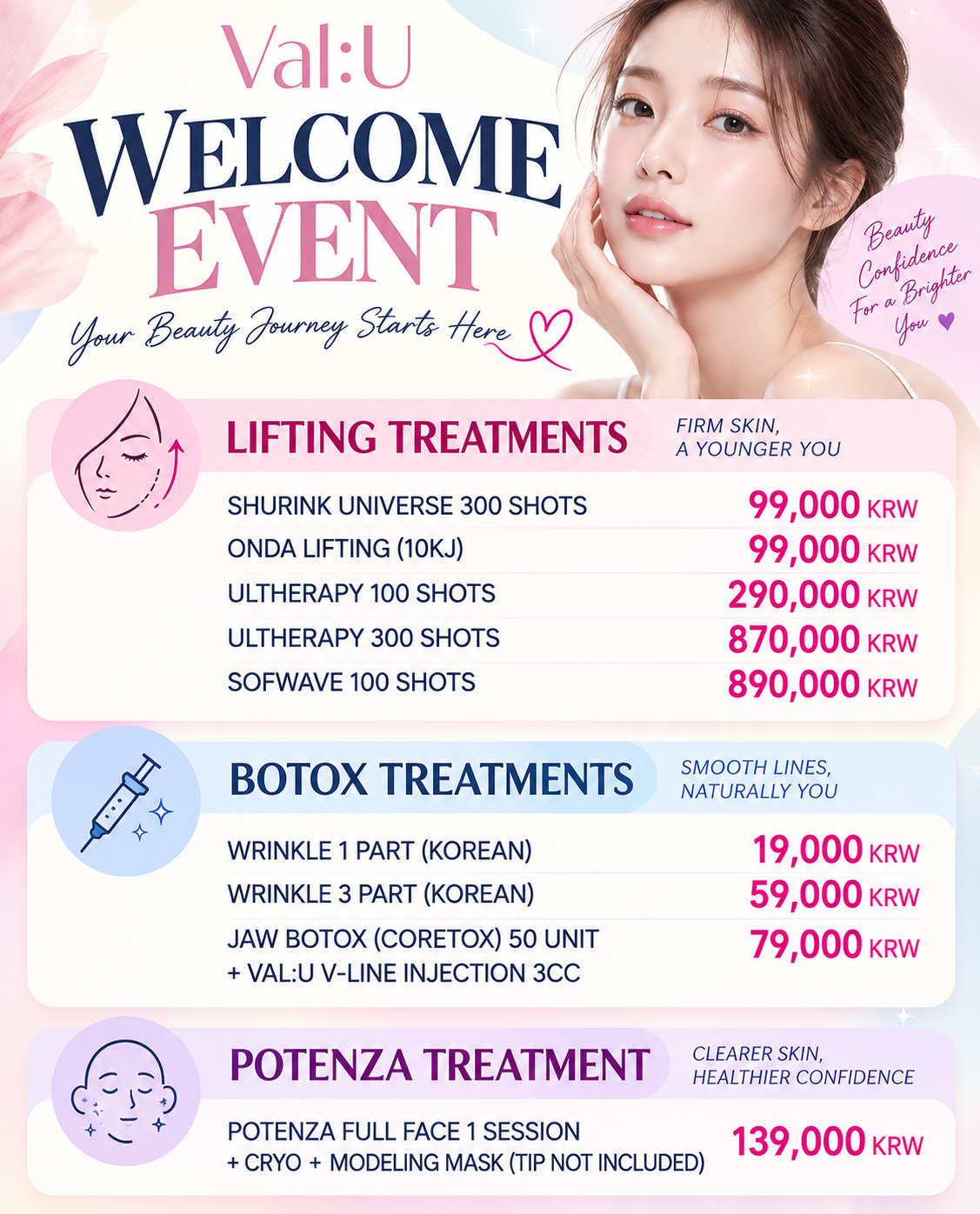
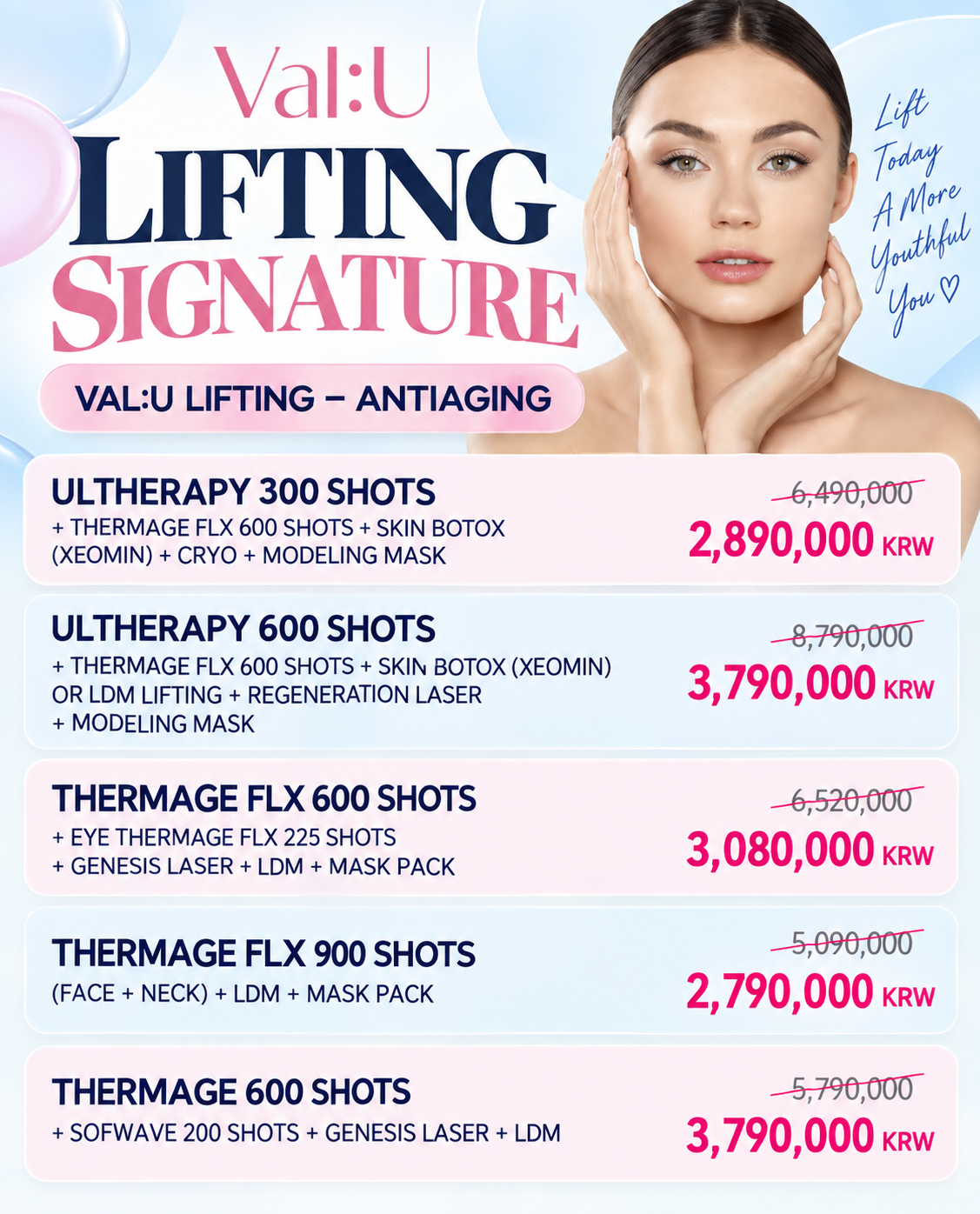
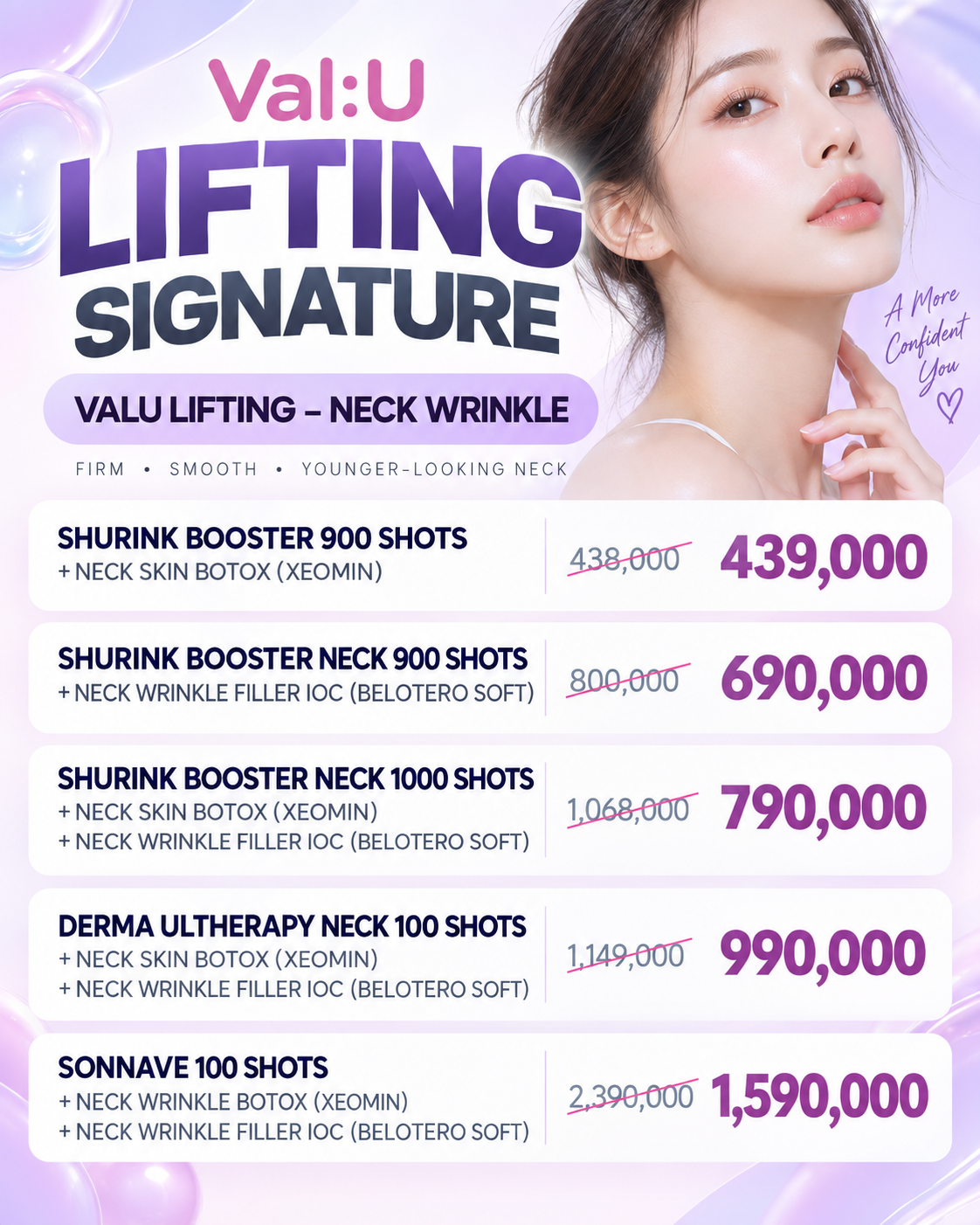
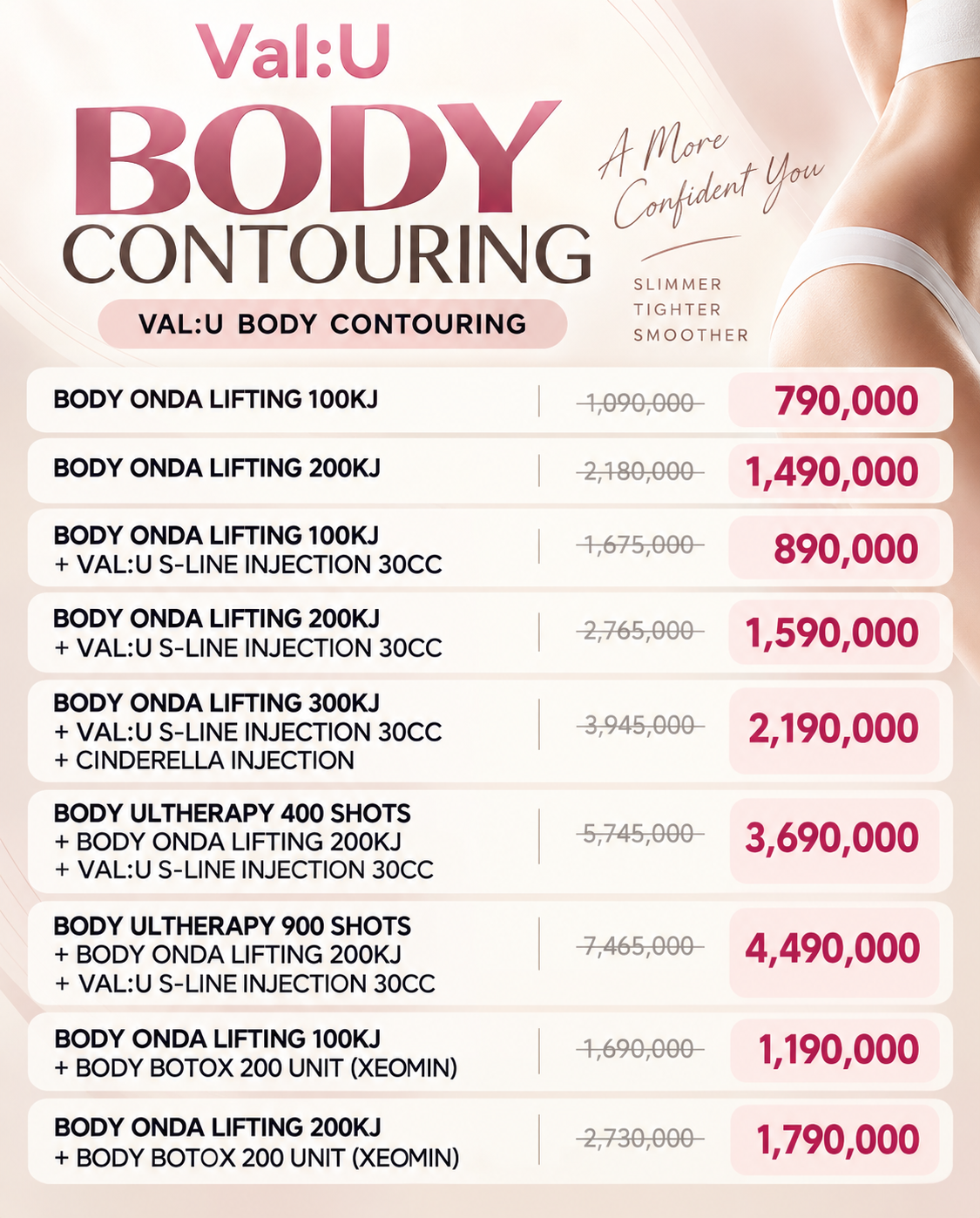
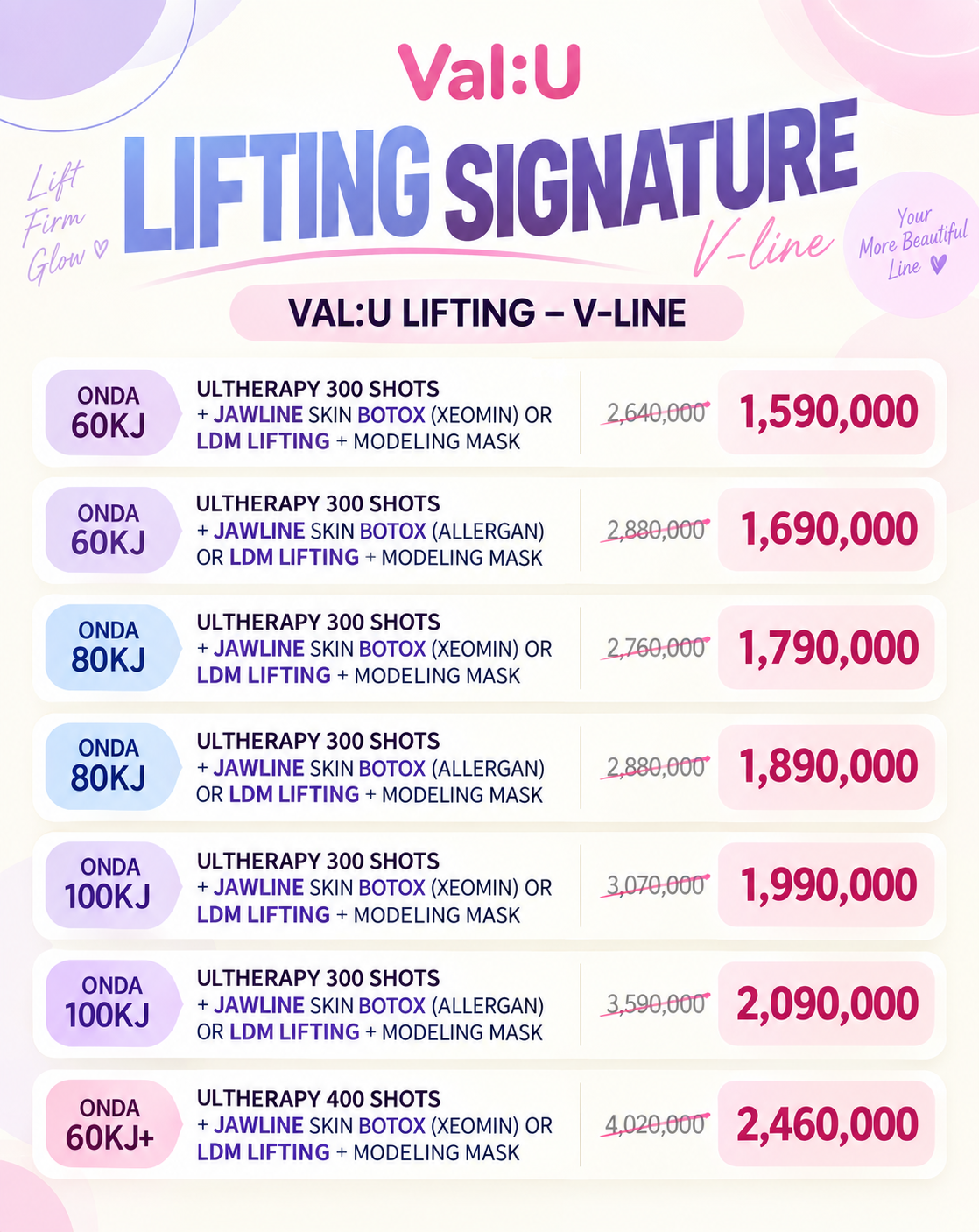
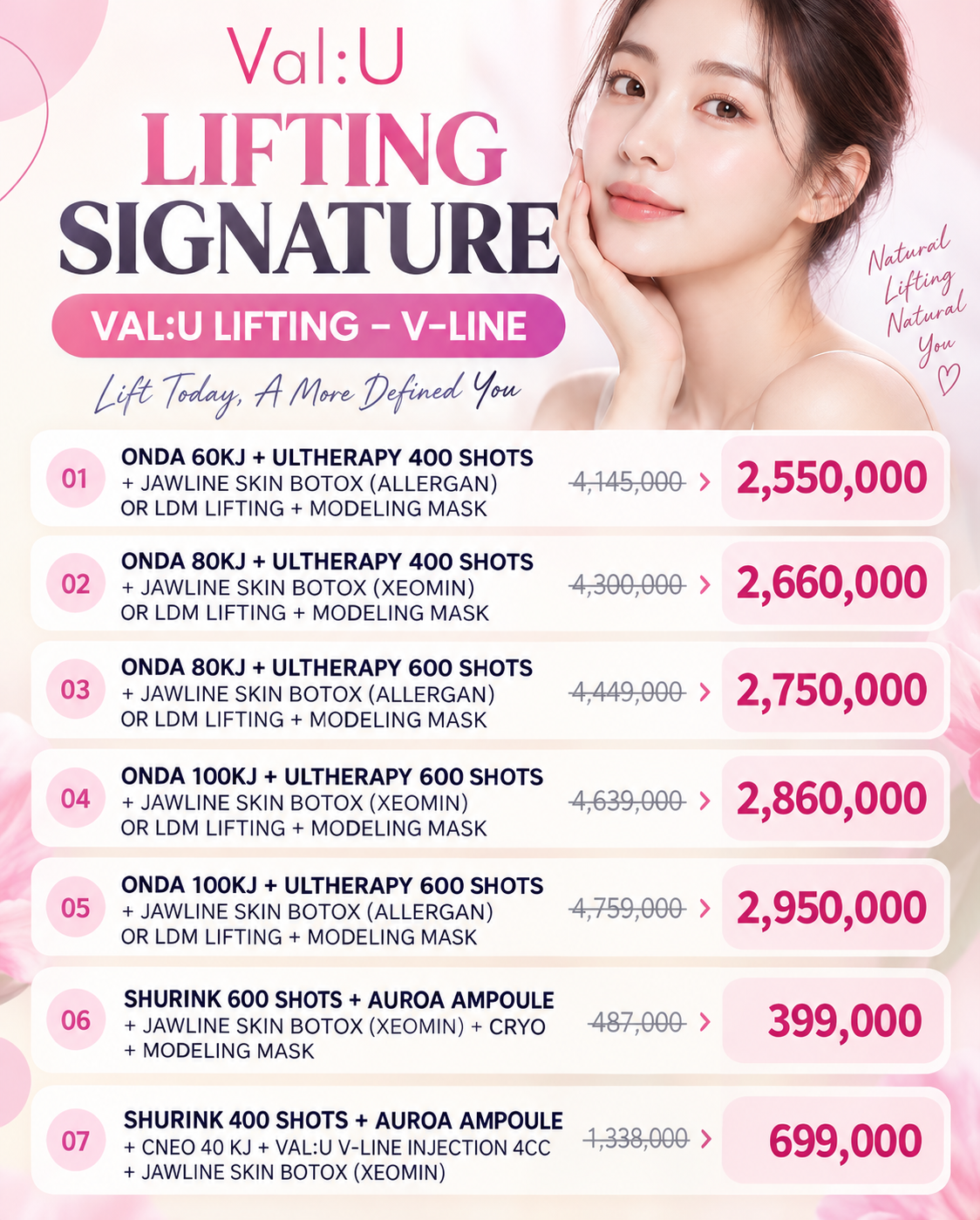
Ultherapy and Thermage: our prices
| Treatment | Price (VAT 10% excluded) |
|---|---|
| Ultherapy
Focused ultrasound lifting at the SMAS layer |
from KRW 330,000 |
| Thermage FLX
Radiofrequency tightening of the dermis |
from KRW 1,090,000 |
| ONDA Face Lifting
Microwave lifting and contouring |
from KRW 690,000 |
| Shurink Universe Ultra F
HIFU for V-line contouring |
from KRW 129,000 |
Official Val:U Clinic prices, October 2026, VAT 10% excluded. The doctor confirms your plan and total before treatment. Full price list.
Ask a doctor about Ultherapy and Thermage
Send your concern, a photo if you like, and your travel dates on WhatsApp. We reply in English with options and prices, and the doctor confirms your plan at consultation before anything starts.
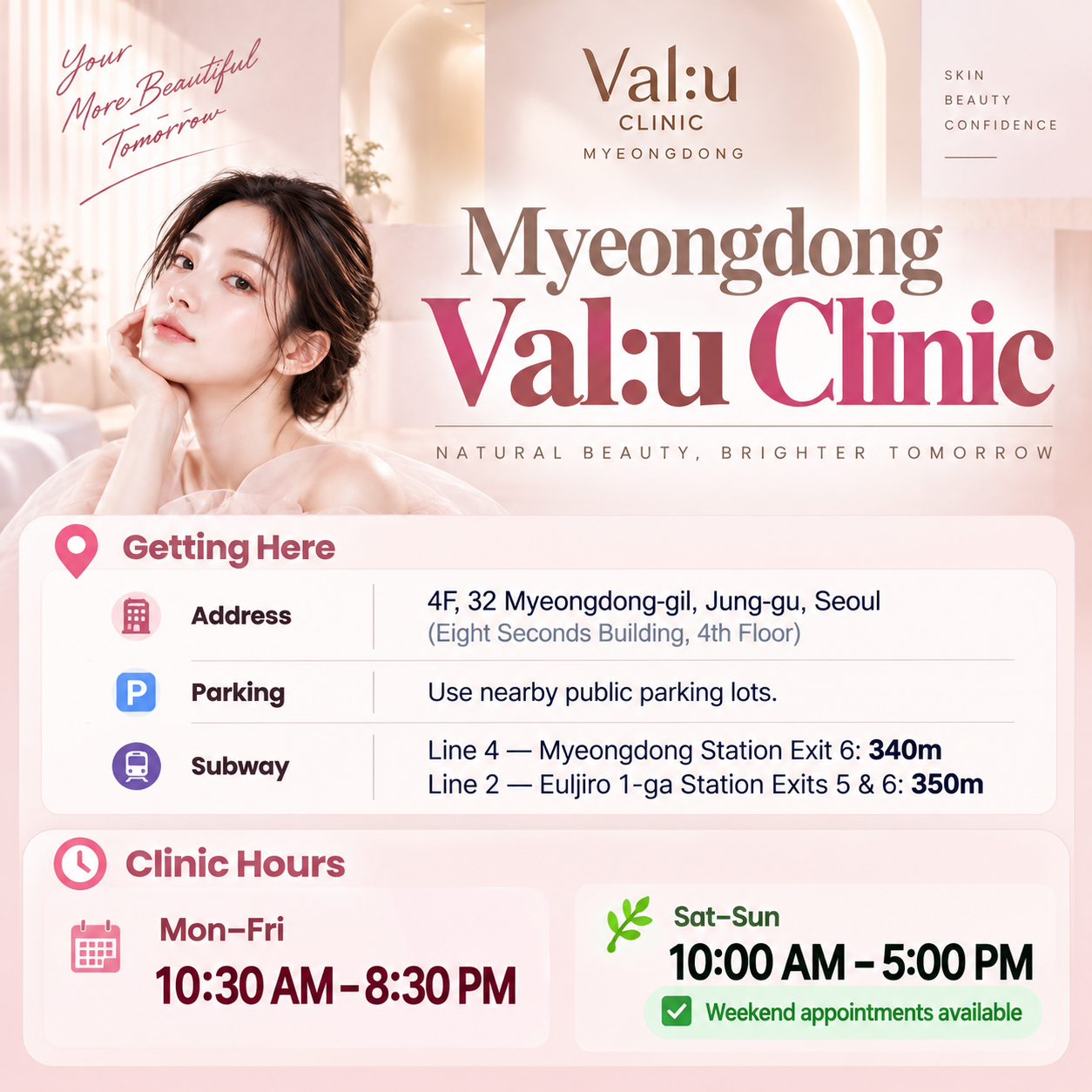
Val:U Clinic · 4F, 32 Myeongdong-gil, Jung-gu, Seoul · Mon–Fri 10:30–20:30 · Sat–Sun 10:00–17:00 · Tel +82-2-2039-7431